REPLICANT
ARTISTS:
Jingjing Xu,Shenlu Liu,Yucen Liu,Victoria Yuan,Fanglin Luo
14/11/2023-20/11/2023
REPLICANT
14/11/2023-20/11/2023
REPLICANT 2023
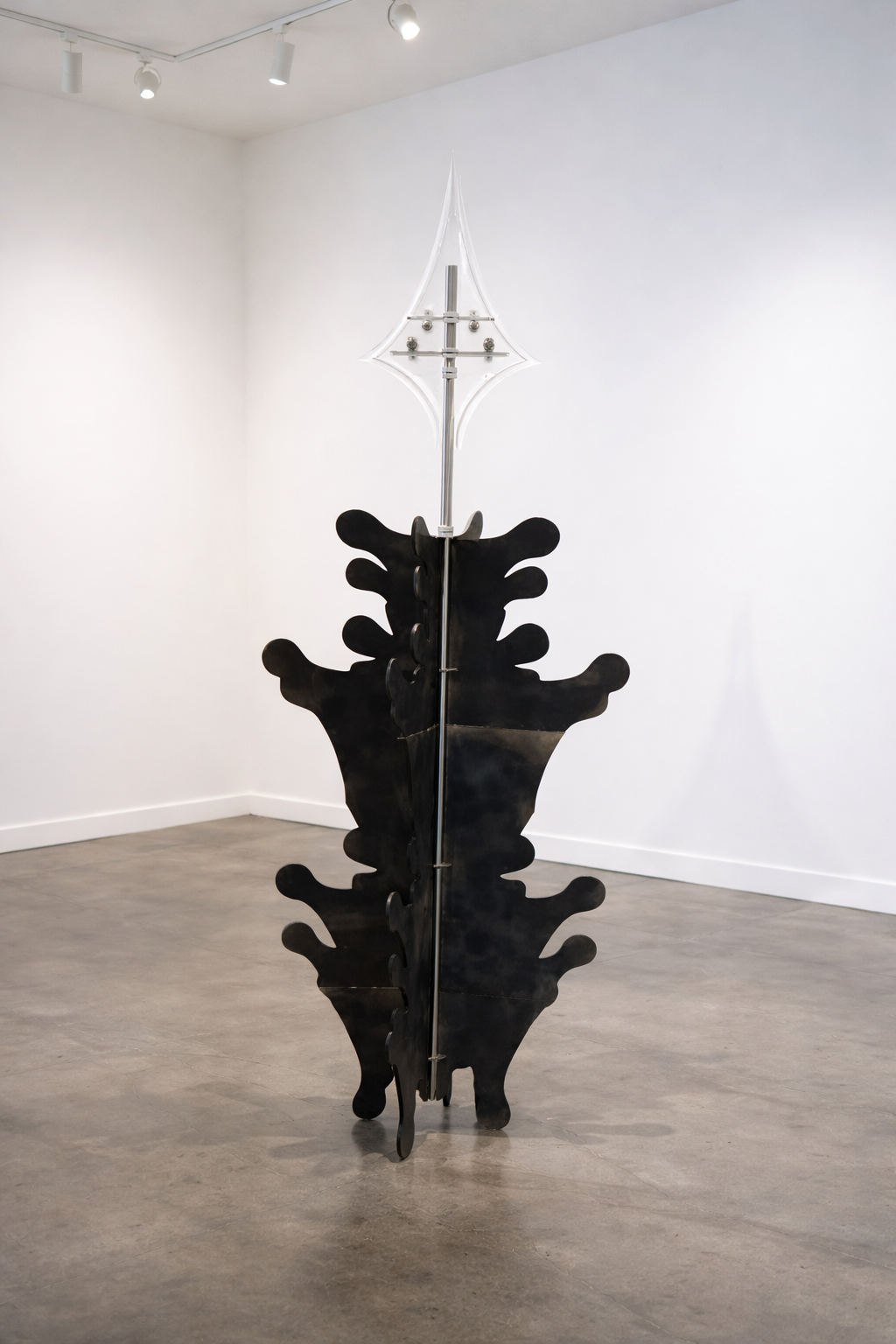
Photo by Luan gallery
In contemporary systems of data governance, prediction no longer functions as a speculative gesture toward the future but increasingly operates as a component of reality itself. Predictive analytics platforms such as Palantir integrate historical records, spatial distributions, and behavioral patterns to generate risk models that directly inform decision-making processes. Once embedded in institutional workflows, these models grant operational force to events that have not yet occurred. In this configuration, the future does not wait to be verified; it becomes actionable at the moment it is calculated. The resulting “copy” is therefore not a representation of reality but a precondition for how reality is organized and governed.
This exhibition takes the copy as its central analytical lens. Rather than reproducing algorithmic systems themselves, the exhibition examines how predictive logic extends beyond computation into ritual, embodiment, interfaces, cognition, and perception. Through a constellation of artistic practices, the exhibition traces how the copy emerges as a governing structure across different material and epistemic domains.
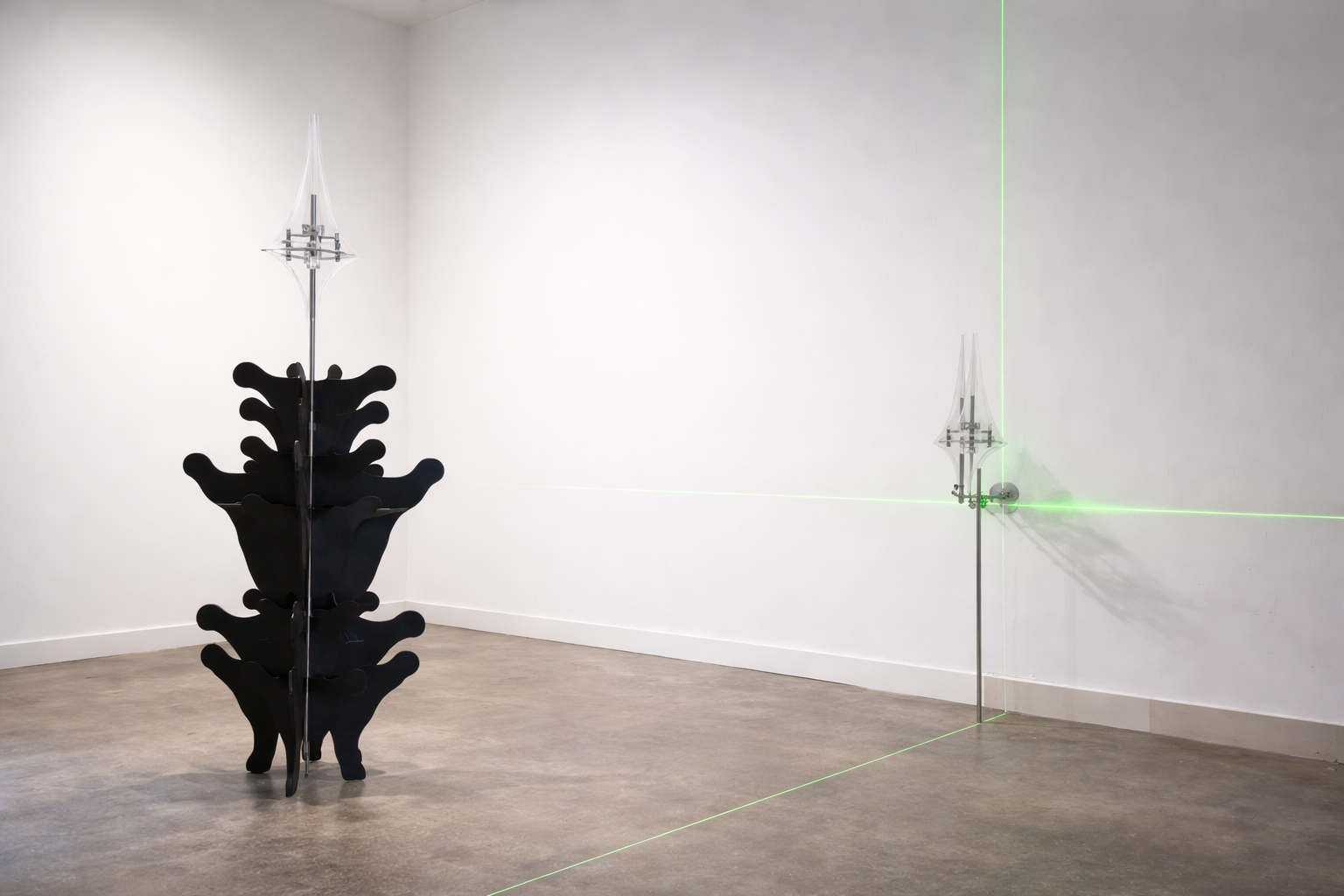
Shenlu’s circular structural installation departs from algorithmic prediction entirely, drawing instead on crystal magic and divinatory ritual. Through geometric symmetry, material symbolism, and spatial enclosure, the work constructs a ritual apparatus oriented toward the unknown. Here, prediction does not operate through probability or statistical inference but through repetition, belief, and symbolic order. The copy appears not as a forecasted outcome but as a summoned possibility sustained by ritual structure. The work situates predictive authority within pre-modern epistemologies, reminding us that the desire to pre-empt uncertainty long predates algorithmic computation and that prediction has always relied on culturally sanctioned systems of trust.
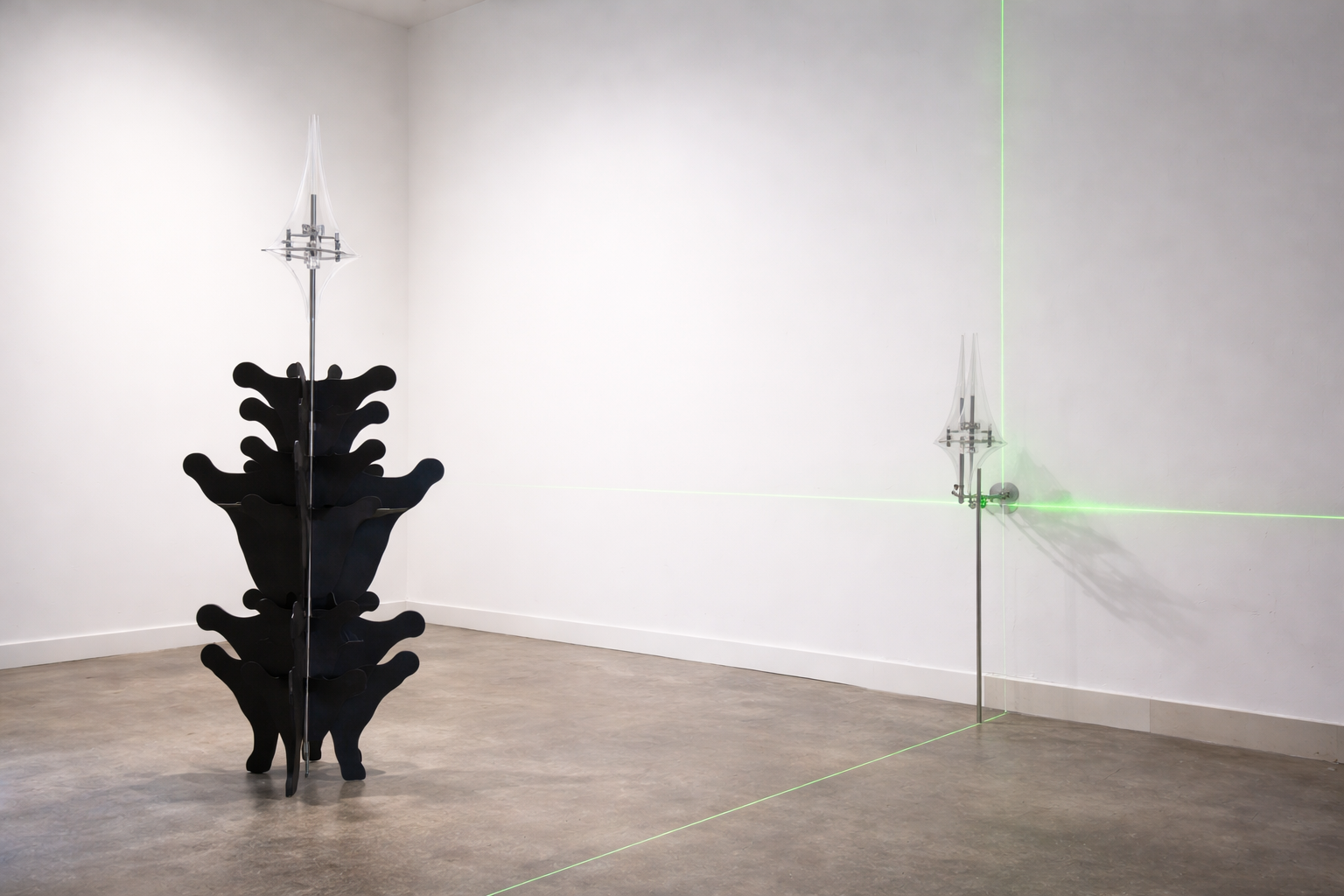
In contrast, Yucen’s vertical sculptural work addresses the copy at the level of the body. The work presents a posthuman bodily construction composed of structural elements resembling supports, prosthetics, or interfaces. Rather than depicting an integrated human form, the body is fragmented, engineered, and reassembled as a functional system. Subjectivity is displaced by modularity. This bodily logic parallels predictive systems’ treatment of individuals as operational units—entities evaluated not through narrative or intention but through performance, optimization, and replaceability. The body becomes a copy insofar as it is designed to be interchangeable, upgradable, and governed by functional criteria.
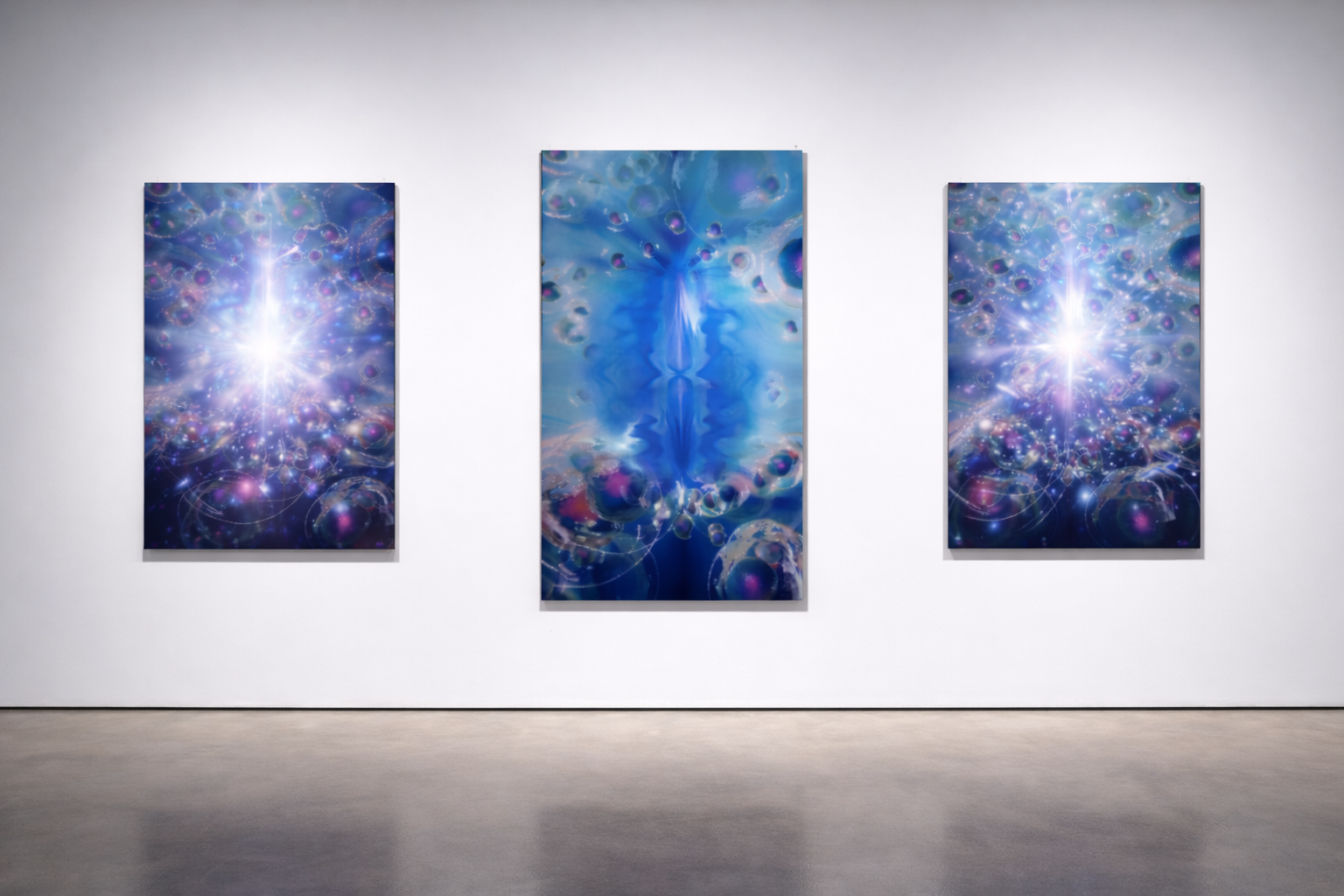
Victoria’s planar sliced works further extend this logic to the level of the interface. Through cuts, sections, and flattened fragments, the works resemble partial system readouts or interrupted visualizations. They do not provide access to a total structure but emphasize incompleteness and occlusion. These fragments point to a defining feature of predictive systems: their most consequential operations are often inaccessible to direct observation. The copy here is neither transparent nor legible; it functions precisely through its opacity. What cannot be seen continues to exert material effects on reality.
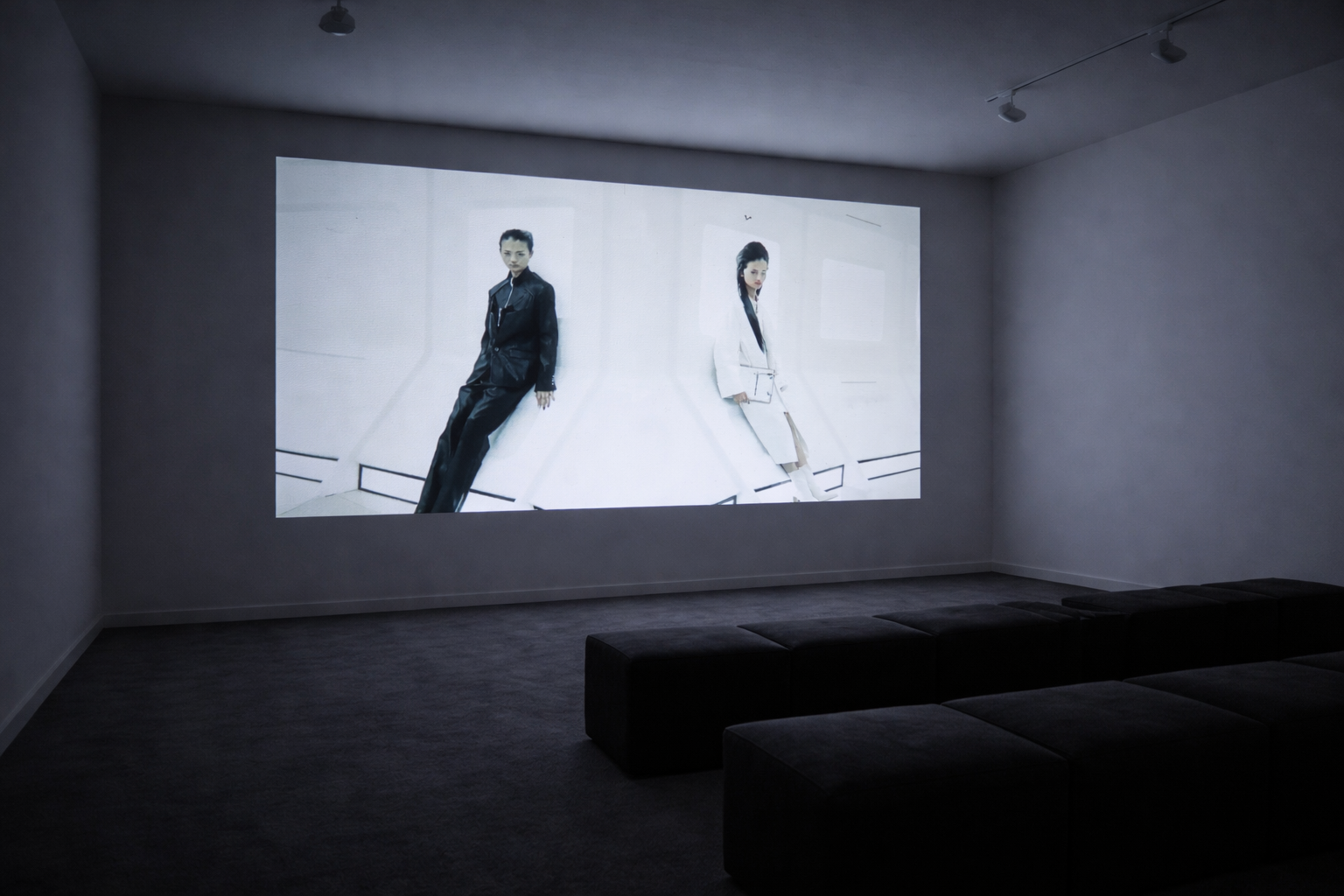
At the level of cognition and identity, Jingjing Xu’s video work Who I Am situates the viewer within a replication center where a copy and its original engage in mutual recognition and interpretation. The work avoids establishing a stable hierarchy between original and replica. Instead, identity emerges through recursive exchange: the copy comes to understand the subject, while the subject recognizes itself through the presence of the copy. Replication is no longer a unidirectional process but a relational one. The copy functions as an epistemic mediator, revealing identity as something co-produced rather than possessed.
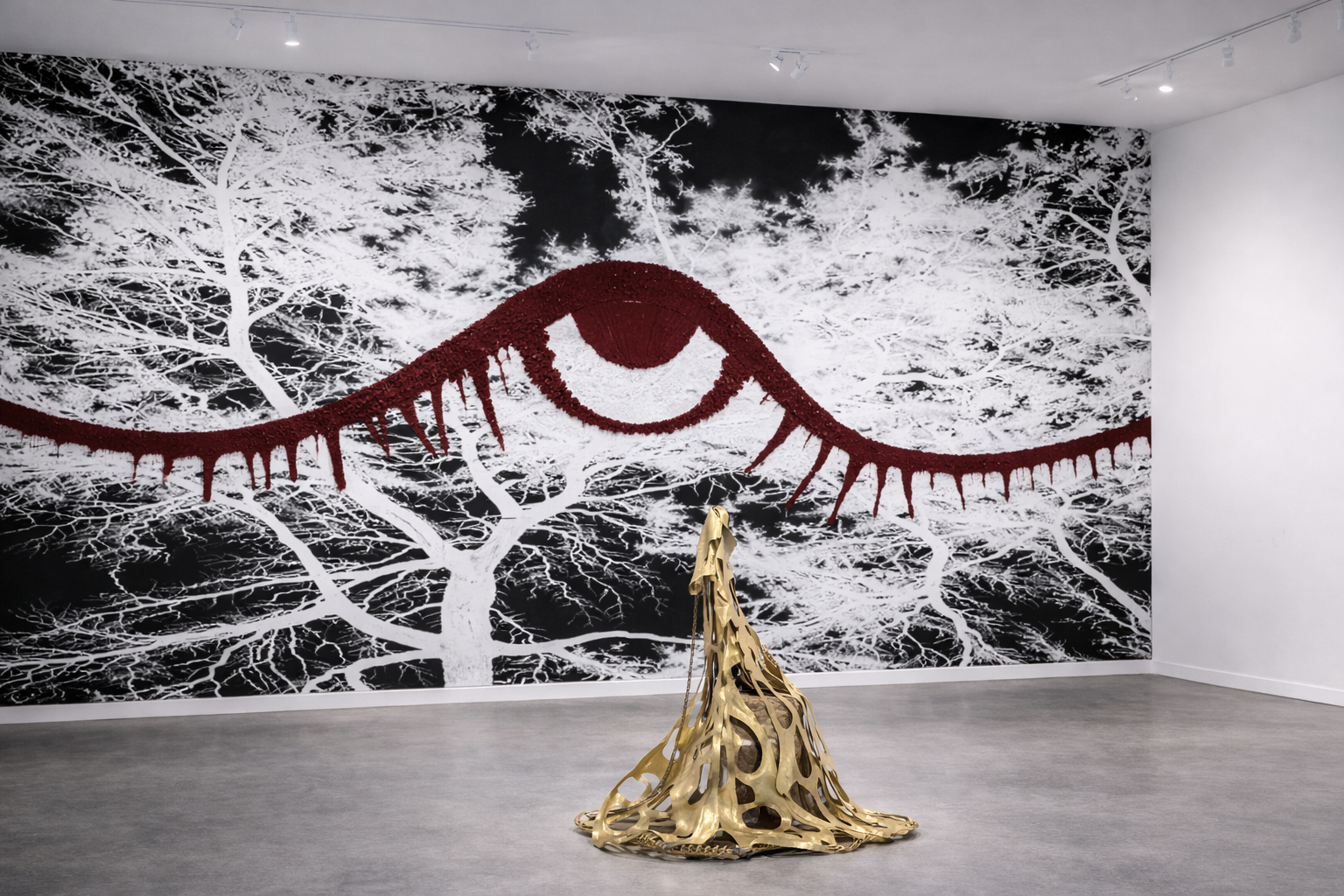
This epistemic loop is further translated into the domain of perception in Fanglin Luo’s work. Set against a high-contrast natural landscape, a stylized eye is superimposed as a graphic, almost symbolic form. The eye does not belong to a specific observer; instead, it appears as an externalized apparatus of vision. Detached from any subject, perception itself becomes a copy—replicated, displaced, and embedded within a larger visual system. Seeing is no longer an act initiated by a human agent but a function that precedes and conditions the subject. The work suggests that perception, like prediction, has been extracted from lived experience and re-inscribed into systemic structures.
Taken together, these works articulate the copy as a contemporary organizing principle rather than a derivative artifact. Across ritual, body, interface, cognition, and perception, the copy operates as a mechanism that precedes action, structures identity, and governs visibility. The exhibition does not propose a singular critique of algorithmic systems but instead situates them within a broader historical and cultural continuum of anticipatory practices. In doing so, it frames the copy not as a technical byproduct but as a critical site through which contemporary reality is produced, negotiated, and contested.